
No Pickaway 72-Hour Release Feed
Pickaway County does not publish a verified official page or filter for people released during a rolling 72-hour period. The sheriff provides Active Inmates, a classic current-list view, and an Inmate Search page. None is labeled as a three-day release archive. The official mobile app also advertises active inmates, not recent releases.
That finding prevents several common but unsupported claims. There is no exact Pickaway 72-hour feed URL, announced refresh schedule, or promised retention window. The live list cannot be sorted backward into a release log. A person who appeared earlier and is now absent may have left county custody, but that change alone does not tell when, why, or where the person went.
Lead instead with the sheriff’s existing records. Ask whether a daily release log already covers each date in the three-day span. If not, request the individual booking/release sheets that match known names, booking numbers, or custody episodes. The court docket supplies the legal context that a short jail code may omit.
Check Pickaway Three-Day Release Records
A 72-hour inquiry works best as three dated record checks, not as a guess drawn from today’s roster. Define the start and end date before contacting the sheriff. Gather exact names, dates of birth, booking identifiers, arrest dates, and court case numbers when available. Those details reduce mismatches and help staff find existing material.
- Write down the precise three-day window and the time zone. Include all calendar dates that the inquiry covers.
- Review Active Inmates only for current status. Save the booking identifier and VINE notification link for a person who remains displayed.
- Call the jail at 740-477-6156 for immediate custody routing. For records, contact the Sheriff’s Office at 740-474-2176 and ask whether an existing release log covers those dates.
- If no log exists, request the named booking/release record with release date and time, reason or code, destination, receiving agency, and authorizing case.
- Read the appropriate Municipal or Common Pleas docket. Compare the signed entry with the sheriff event before calling it a community release.
- When state prison appears in the path, use the ODRC offender detail. A move into ODRC or between its institutions is continued custody.
The Pickaway County 24-hour release process is the better fit when only today’s activity matters. The three-day method earns its wider scope when the exact day is unclear or office access has been interrupted.
Note: A narrow date range helps locate existing records but does not require the sheriff to compile a new custom report.
Pickaway 72-Hour Release Fields
Because no published 72-hour list exists, no official set of public feed columns can be promised. A complete three-day request should target the event fields that distinguish a release from a transfer and connect it to the correct person. Ask for the code legend when the record uses a short disposition or release abbreviation.
| Requested field | Why it matters |
|---|---|
| Full name and booking ID | Separates similar names and links the result to one custody episode. |
| Booking or arrest date | Confirms that the record belongs within the episode under review. |
| Release date and time | Places the physical end of Pickaway custody inside or outside the three-day span. |
| Release type or code | Identifies the recorded event when paired with the agency’s plain meaning or code legend. |
| Destination or custodian | Distinguishes return to the community from ODRC, another jail, hospital, or agency transfer. |
| Authorizing court and case | Points to the docket entry that explains the legal basis. |
| Releasing facility | Confirms whether Pickaway County Jail, not another local or state facility, held the person. |
Bond, recognizance, dismissal, time served, sentence completion, community control, transfer, medical movement, escape, and death are possible custody outcomes described in the research. They are not a Pickaway-specific code set. Use only the wording found in the actual record.
Pickaway Weekend Release Checks
A three-day window can cover a weekend or bridge a holiday when records-office access is limited. It can also catch an event when the searcher knows only an approximate date. Yet the official sources do not publish Pickaway weekend processing rules, holiday release practices, release hours, or a guaranteed posting lag. Do not assume another county’s schedule applies.
A court order may come before staff complete records checks, review other warrants, and process the physical departure. Another hold can prevent a community release even after bond or a release order appears in the docket. The jail record can show the actual custody event, while the court entry explains its authority. Compare both after offices reopen if immediate confirmation was not available.
Keep the window anchored to dates, not to a vague phrase such as “over the weekend.” If a holiday adds another closed day, expand the request only as needed and state each date. That approach gives the records custodian a clear search target and avoids treating a current roster snapshot as a multi-day log.
Pickaway Roster Drops Need Proof
The distinctive Pickaway issue is that “Booking Search” leads to a VINE-backed Active Inmates system. On the research date, the underlying roster records were coded IN, not OUT. The feed carried current custody and booking fields, but it did not supply a published archive of released entries.
The official current roster capture shows the local search, current photos, record details, and status-change link.
The captured interface is useful while a person remains listed. After removal, it leaves a verification question. The person may have returned to the community, transferred into ODRC, moved under another warrant, entered a hospital, escaped, died, or been removed after a data correction. Only a matching release record and case history can resolve the event.
Timestamp every check. A live operational page changes, and the sheriff does not promise a polling interval. A later screen cannot show what the system displayed throughout the prior three days.
Note: Current roster access is a lead for notification and identification, not a substitute for dated release records.
Pickaway Search Has No Archive
The separate official Inmate Search page showed an empty-state message when captured. It offered no released-person label, date filter, or three-day retention promise.
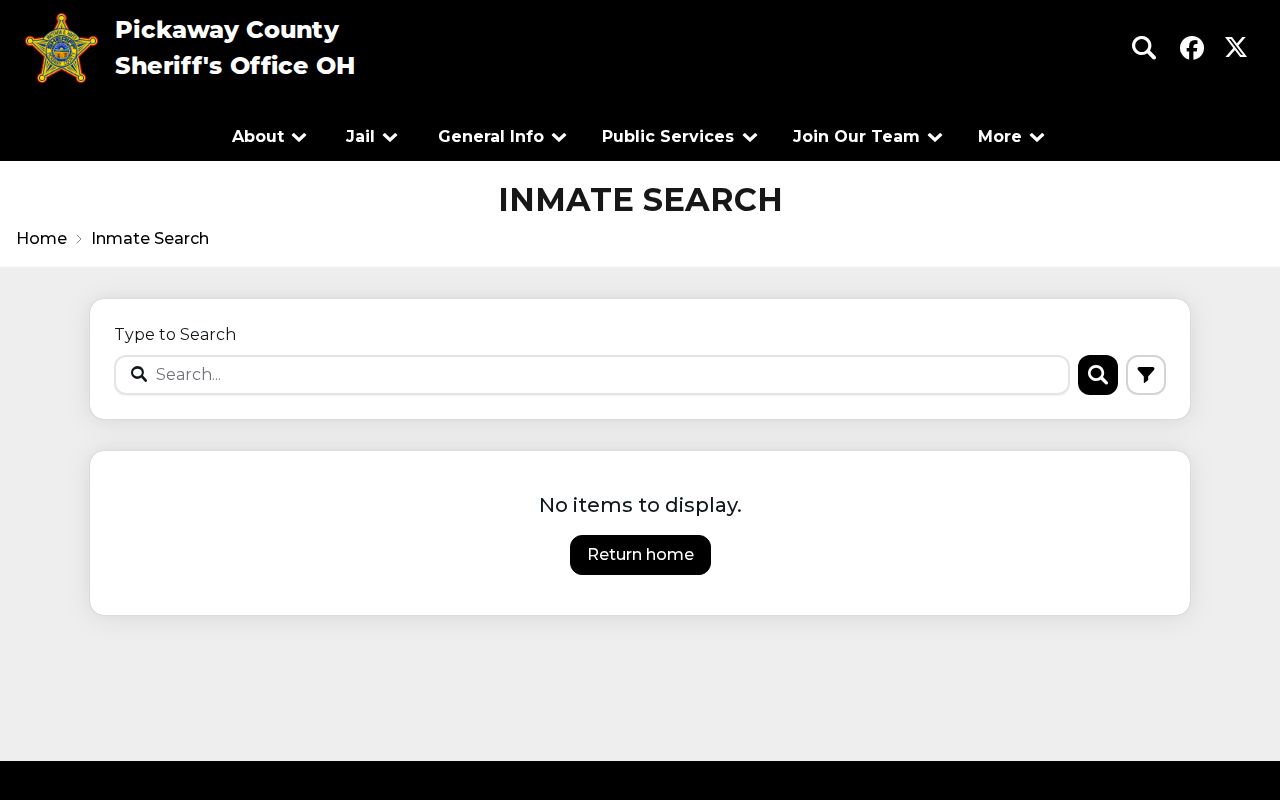
An empty interface does not establish that the three-day window contained no releases. It also cannot prove that a named person was never held. The image documents the negative feed finding and supports the need for a direct sheriff request.
The official sheriff app reaches the same current-status ecosystem. Its listings promote “View Active Inmates,” along with alerts and news, but no app-only recent-release archive was verified. Web and app access therefore share the same core limit: both help with current information, and neither supplies a dependable historical window.
Verify Pickaway Release Authority
A Pickaway County jail event and a court order should be paired whenever the exact release matters. The Circleville Municipal Court docket serves countywide misdemeanor and traffic cases and handles the initial stage of many felony matters. Pickaway Common Pleas eServices is the felony endpoint after indictment or bind-over. Their journal entries can show bond, dismissal, sentence, judicial release, community control, warrant, revocation, or termination.
The docket does not always show when jail staff completed processing. A “closed” case label is also not a release timestamp. Conversely, a release field in sheriff data may use a code that gives little legal detail. Request the signed entry and the booking/release sheet for a sound three-day finding.
Ohio VINE adds a prospective alert path. Register while the person is still held through the Ohio VINELink portal or the current sheriff profile. A general-release alert says the participating custodian transmitted that event, but the Ohio Attorney General warns against sole reliance. Confirm the result with the source agency and docket.
Pickaway Release and Transfer Paths
A person released from Pickaway County Jail may return to the community or pass to another custodian. ODRC transfer is common after a felony prison sentence. Correctional Reception Center receives and classifies men entering the state system, so a move there is not release from confinement. A later move from CRC to Pickaway Correctional Institution or another prison is usually another state transfer.
| Observed change | Correct interpretation | Confirm with |
|---|---|---|
| Name remains on active roster | Currently published in Pickaway jail custody | Jail call and current profile |
| Name leaves roster | Departure reason is unknown | Sheriff release record and docket |
| Person appears at CRC | County-to-state transfer | ODRC offender detail |
| ODRC institution changes | Usually movement within state custody | ODRC status and institution fields |
| ODRC shows qualified released status | State release event with a stated qualifier | Full offender detail and Central Records |
For one person whose last custodian is uncertain, the full Pickaway County release-record search branches among the sheriff, courts, ODRC, VINE, and conditional federal channels. A three-day list request stays focused on the county-jail time span.